Sector 17 Market Chandigarh is unlike almost any other Indian bazaar, and that’s entirely by design. Conceived in the 1950s by Swiss-French architect Le Corbusier as part of Chandigarh’s status as India’s first planned post-independence city, this was never meant to grow organically the way most Indian markets do — it was drawn up from day one as the city’s official commercial and cultural centre, with wide pedestrian plazas, fountains, and open squares replacing the cramped lanes typical of older bazaars.
Nearly seven decades later, Sector 17 remains Chandigarh’s most recognisable public space, even as newer malls have sprung up in neighbouring Mohali and Zirakpur. For anyone planning a visit, here’s a clear picture of where this planned shopping district sits and how to reach it.
Sector 17 Market Chandigarh Overview
| Detail | Information |
| Location | Sector 17, central Chandigarh |
| Designer | Le Corbusier, as part of Chandigarh’s original 1950s master plan |
| Known for | Fashion, electronics, home decor, restaurants, cinemas, open plazas |
| Character | India’s first fully planned, pedestrian-friendly city centre market |
| Nearest major transit | ISBT Sector 17, one of North India’s busiest bus terminals, located directly within the sector |
| Metro access | None — Chandigarh has no metro system |
| Nearest railway station | Chandigarh Railway Station, roughly 8 km away |
India’s First Planned City Centre
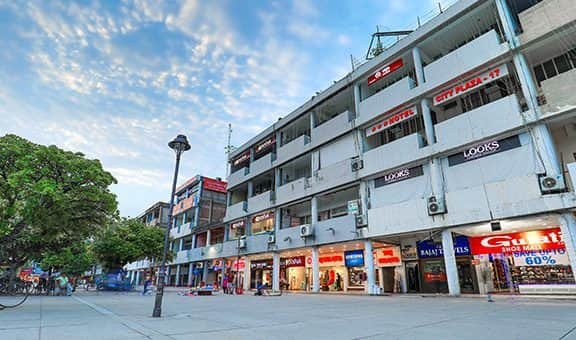
Sector 17 was designed as the primary commercial and business centre for Chandigarh, a city where every sector functions as a self-contained neighbourhood under Le Corbusier’s original urban plan. But the vision extended well beyond simple retail — Sector 17 was meant to be a genuine gathering space where people could come together and community life could thrive, and that intention shows clearly in how the area is laid out today. Wide, symmetrical pedestrian plazas replace the narrow, chaotic lanes of traditional Indian markets, and open squares with fountains give the whole area a distinctly different rhythm from the fast, transactional pace of most Indian bazaars.
The market itself offers a genuinely comprehensive retail mix, from international brands like Zara, H&M, and Adidas to local boutiques, alongside restaurants spanning North Indian, Punjabi, Chinese, and continental cuisine. Coffee shops, bakeries, and dessert cafés draw students and professionals throughout the day, while ice cream vendors and snack stalls appear in the evenings, especially during events. The plaza fountain area regularly hosts evening light and music shows, along with occasional nukkar nataks (street plays) and flashmobs, reflecting Sector 17’s role as much a social and cultural hub as a shopping destination.
Book lovers have their own reason to visit too — Universal Book Store, the English Book Shop, and Universal Book Depot are all well-regarded stops here, alongside the smaller but popular Pandey Book House, known specifically for its wide range of academic titles.
Getting to Sector 17 Market
Sector 17’s role as Chandigarh’s civic and transport heart makes reaching it straightforward, provided you understand the city doesn’t have a metro system to rely on.
By Bus
- ISBT Sector 17 sits directly within the market area and functions as one of North India’s busiest bus terminals, connecting Chandigarh to Punjab, Haryana, Himachal Pradesh, and Delhi.
- This makes Sector 17 the single most well-connected sector in the entire city, given the terminal’s location right at its heart.
By Rail
- Chandigarh Railway Station sits roughly 8 km from Sector 17 Market, requiring an auto, cab, or local bus for the onward journey.
Metro — Not Available
- Chandigarh currently has no metro rail system, so unlike several other major Indian cities, there’s no metro option for reaching Sector 17 — the ISBT and the city’s well-marked road network handle virtually all connectivity here.
By Road
- Wide, well-marked roads connect Sector 17 to every other sector of Chandigarh, and traffic discipline in the city is noticeably better than in most Indian urban centres.
- Once you’ve arrived, the market itself is entirely pedestrian-friendly, one of its biggest strengths compared to markets that force visitors to navigate vehicle traffic within the shopping area itself.
- Parking, however, is a genuine drawback — free parking is essentially unavailable, so budget for paid parking if driving.
Distance From Sector 17 Market to Key Points
| From Sector 17 Market | Approximate Distance | Typical Travel Time |
| ISBT Sector 17 | Within the market | 1–2 minutes on foot |
| Chandigarh Railway Station | ~8 km | 20–25 minutes by road |
| Chandigarh Capitol Complex | A short drive | 10–15 minutes by road |
| Zakir Rose Garden | Nearby | 10 minutes by road |
What’s Around Sector 17 Market
Chandigarh’s methodical sector-based layout puts several significant landmarks and cultural sites within easy reach of Sector 17.
- Chandigarh Capitol Complex — a UNESCO World Heritage Site housing Le Corbusier’s modernist government buildings, including the Legislative Assembly, Secretariat, and High Court.
- Open Hand Monument — Le Corbusier’s iconic symbol of peace and reconciliation, located within the Capitol Complex.
- Government Museum and Art Gallery — situated near Sector 17, showcasing artefacts, paintings, and sculptures reflecting Indian history and culture.
- Zakir Rose Garden — a lovely green space nearby, particularly worth visiting during the February Rose Festival.
- Neelam Theatre — a historic single-screen cinema, once the beating pulse of Chandigarh’s film culture, now a piece of the city’s heritage.
Visiting Tips for Sector 17 Market
A planned, orderly market still rewards a bit of timing awareness.
- Visit during weekday daytime for a noticeably calmer shopping experience with fewer crowds and better deals from shopkeepers.
- October to March offers the most pleasant weather, with temperatures ranging comfortably between 10°C and 25°C.
- Time your visit around the Rose Festival in February, Baisakhi in April, or the Chandigarh Carnival in November if you want to combine shopping with the city’s major cultural events.
- Budget for paid parking, since free parking is essentially unavailable near the market.
- Keep valuables secure, particularly bicycles or vehicles left unattended, given occasional reports of theft in the area.
Frequently Asked Questions
Q1. Can I reach Sector 17 Market by metro?
No, Chandigarh does not have a metro rail system, so the market relies on its ISBT bus terminal, road network, and the railway station roughly 8 km away for connectivity.
Q2. Why is Sector 17 Market laid out so differently from other Indian markets?
It was designed from the outset by architect Le Corbusier as part of Chandigarh’s 1950s master plan, with wide pedestrian plazas and open squares replacing the narrow, organically grown lanes typical of traditional Indian bazaars.
Q3. Is parking available near Sector 17 Market?
Free parking is essentially unavailable, so visitors driving to the market should budget for paid parking options nearby.
Q4. What’s the best time of year to visit Sector 17 Market?
October through March offers the most comfortable weather, and timing a visit around events like the February Rose Festival or the November Chandigarh Carnival adds a cultural dimension to the shopping trip.