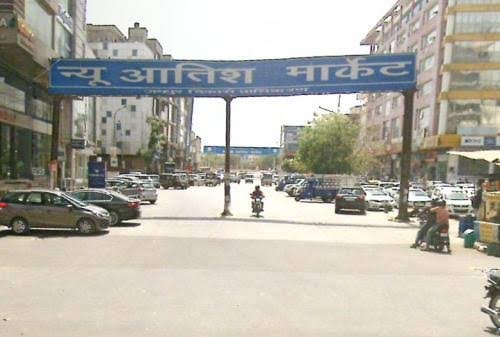
New Aatish Market Jaipur carries a name with genuinely royal roots — the original Aatish zone inside Jaipur’s old walled city once functioned as the Maharaja’s royal stables, housing horses, fodder stores, and watering spaces for the royal court centuries ago. After independence, that historic pocket slowly converted into a trading area, but as Jaipur expanded, its narrow lanes simply couldn’t support the heavy trucks and large showrooms that modern construction trade demanded. The solution was New Aatish Market in Mansarovar — a purpose-built commercial district with broader roads and larger plots, now standing as Jaipur’s primary destination for home-building supplies.
For anyone sourcing tiles, furniture, or bath fittings, or simply curious about this genuinely well-connected commercial zone, here’s a clear picture of where it sits and how to reach it.
New Aatish Market Jaipur Overview
| Detail | Information |
| Location | New Sanganer Road / Gopalpura Bypass Road, Mansarovar, Jaipur |
| PIN Code | 302019 |
| Known for | Tiles, bath fittings, plywood, furniture, textiles, jewellery |
| Historical name origin | The old Aatish zone, once the Maharaja’s royal stables in the walled city |
| Nearest metro | New Aatish Market station, Pink Line, sits right at the market entrance |
| Nearest railway | Gandhi Nagar (3–4 km), Durgapura (4–5 km), Jaipur Junction (6–8 km) |
From Royal Stables to Jaipur’s Home-Building Backbone
The story behind New Aatish Market’s name is genuinely tied to Jaipur’s royal history. Centuries ago, the original Aatish zone inside the old walled city served the Maharaja’s court as stable grounds — housing horses, storing fodder, and providing watering spaces. Over time, as that historic area transitioned into a trading pocket after independence, it retained the Aatish name even as its function shifted entirely away from horses and toward commerce.
The problem, though, was scale. Jaipur’s old-city lanes were never built for heavy trucks or large construction showrooms, and as the city grew, planners recognised the need to relocate bulky trades — tiles, bath fittings, plywood, and furniture — into a purpose-built zone with room to actually operate at scale. New Aatish Market in Mansarovar was the answer, developed with the wide roads and generous plot sizes that the old city simply couldn’t offer.
Today, the market functions as Jaipur’s industrial shopping backbone. It doesn’t have pink walls or heritage arches, but it delivers something arguably more practical for anyone building or renovating a home — genuine scale, wide product choice, and competitive pricing. The area around the metro station itself has also developed a reputation for textile shops, jewellery stores, and local eateries, giving the broader commercial district a bit more variety beyond just construction materials.
Getting to New Aatish Market
Few Jaipur markets can claim connectivity quite as direct as New Aatish Market’s — its metro station sits genuinely at the market’s own entrance.
By Metro
- New Aatish Market metro station, the second station on the Pink Line, opened on 3 June 2015 and sits right next to the market itself, offering essentially walking-distance access for anyone arriving by metro.
- The station connects toward Mansarovar Terminus in one direction and onward through Vivek Vihar toward Badi Chaupar in the old city in the other, with the full journey to Badi Chaupar (near City Palace and Hawa Mahal) taking around 22 to 30 minutes.
- A dedicated JMRC-operated parking area and feeder bus service are both available at the station.
- The station operates daily from 6:00 AM to 10:00 PM.
By Rail
- Gandhi Nagar Railway Station is the closest option, roughly 3 to 4 km away.
- Durgapura Railway Station sits a bit further, roughly 4 to 5 km away.
- Jaipur Junction, the city’s main railway terminus, is roughly 6 to 8 km away, with a direct metro journey of about 5 km and 15 minutes on the Pink Line connecting the two.
By Bus
- Local Jaipur city buses travelling toward Gopalpura, Mansarovar, or Tonk Road stop directly at the New Aatish Market bus stop.
- 22 Godam Public Bus Stop also serves the broader locality as a nearby option.
By Road
- Gopalpura Bypass Road and Tonk Road both provide direct routes to the market, with the area also sitting just a kilometre from the Jaipur-Jodhpur National Highway (NH-52).
- Autos, taxis, shared autos, and e-rickshaws are all readily available, alongside smooth Ola, Uber, and Rapido service throughout the day.
Distance From New Aatish Market to Key Points
| From New Aatish Market | Approximate Distance | Typical Travel Time |
| New Aatish Market Metro Station | Adjacent | 1–2 minutes on foot |
| Mansarovar Metro Terminus | A short distance | 1 stop by metro |
| Jaipur Junction Railway Station | ~6–8 km | 15 minutes by metro |
| Badi Chaupar (City Palace area) | ~12 km | 22–30 minutes by metro |
What’s Around New Aatish Market
Mansarovar’s well-developed commercial character puts several notable localities and destinations within reach of New Aatish Market.
- Mansarovar — the broader locality anchoring the Pink Line’s western terminus, home to residential and commercial development alongside the market.
- RIICO Industrial Area — a nearby industrial zone within 6 to 8 km, reflecting the area’s broader manufacturing and trade character.
- Malviya Nagar Industrial Area — another nearby industrial zone within similar distance.
- Shanthi Nagar — the broader neighbourhood of which New Aatish Market forms a sub-locale.
- Sindhi Camp Bus Stand — accessible via a direct Pink Line connection through Badi Chaupar, useful for onward travel across Jaipur.
Shopping Tips for New Aatish Market
A purpose-built construction and home-supplies market rewards a bit of planning before a bulk purchase trip.
- Use the metro directly, given how genuinely close the station sits to the market entrance — it’s consistently the fastest and most convenient way to arrive.
- Avoid peak metro hours, roughly 8 to 10 AM and 5 to 8 PM, for a more comfortable journey if you’re travelling during commuter rush periods.
- Compare prices across multiple shops before committing to large purchases like tiles or furniture, since the market’s scale means genuine variation in pricing between vendors.
- Arrange appropriate transport for bulky items, since construction materials like tiles and plywood typically require more than an auto-rickshaw to transport home.
- Combine your visit with the nearby textile and jewellery shops around the station if you’re looking to extend your trip beyond home-building supplies.
Frequently Asked Questions
Q1. How close is the metro station to New Aatish Market?
Genuinely adjacent — the New Aatish Market metro station on the Pink Line sits right at the market entrance, making it one of the most directly metro-accessible markets in Jaipur.
Q2. Why is it called “New” Aatish Market?
It was developed as a purpose-built replacement for the original Aatish trading zone inside Jaipur’s old walled city, which couldn’t accommodate heavy trucks or large showrooms as the city expanded, leading planners to establish this newer, wider-roaded market in Mansarovar.
Q3. What kind of products is New Aatish Market known for?
It’s primarily Jaipur’s go-to destination for home-building supplies — tiles, bath fittings, plywood, and furniture — alongside a secondary cluster of textile shops, jewellery stores, and local eateries near the metro station.
Q4. How do I get from New Aatish Market to Jaipur’s old city attractions like City Palace?
Take the Pink Line metro directly from New Aatish Market station toward Badi Chaupar, a journey of roughly 22 to 30 minutes that drops you within walking distance of City Palace, Hawa Mahal, and Jantar Mantar.