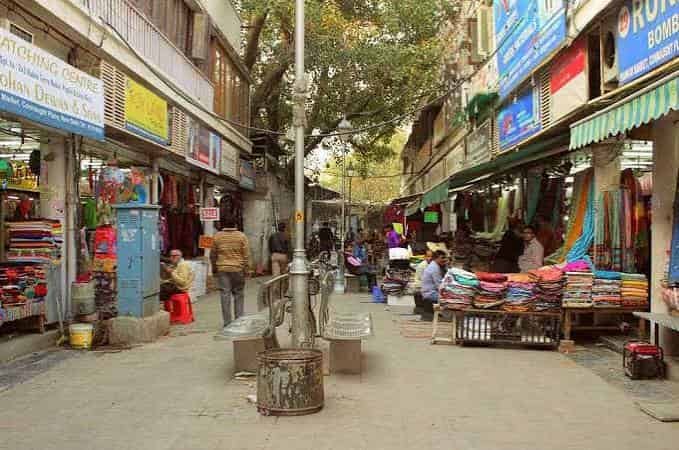
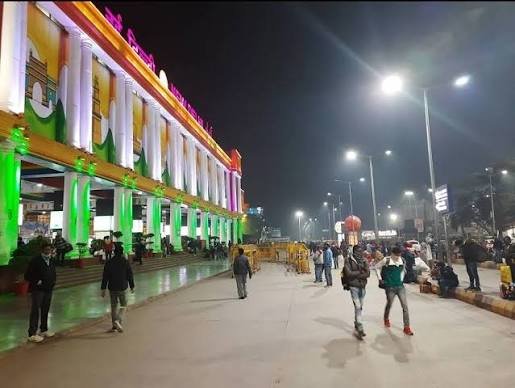
Gole Market Delhi began life in 1921 as one of Edwin Lutyens’ more unusual architectural experiments — a market building shaped dodecagonal on the outside and octagonal within, built directly into a traffic roundabout as part of his grand plan for the new imperial capital. Over a century later, this circular structure still anchors one of Central Delhi’s most historically layered neighbourhoods, having survived Partition, absorbed waves of Bengali and Sindhi refugee families who transformed it into a culinary landmark, and now stands mid-restoration, preparing for a second life as both heritage site and cultural space.
For anyone curious about this pocket of colonial-era Delhi, whether for its history, its food, or simply its central location near Connaught Place, here’s a clear picture of where Gole Market sits and how well the city connects to it.

Gole Market Delhi: Overview Table
| Detail | Information |
| Location | Central New Delhi, within Lutyens’ Delhi |
| PIN Code | 110001 |
| Built | 1921, designed by Edwin Lutyens |
| Architecture | Dodecagonal exterior, octagonal interior, built into a traffic roundabout |
| Also known as | Dak Khana |
| Nearest metro | R.K. Ashram Marg (~500 m), Shivaji Stadium (~800 m), Patel Chowk (~1.5 km) |
| Nearest railway station | New Delhi Railway Station, under 2 km |
A Colonial-Era Market Reinvented by Refugee Communities
Gole Market’s design was genuinely ahead of its time for a civic market — its unusual geometry was considered revolutionary when built, part of the axis Lutyens planned for the new capital. Conceived specifically to serve government employees living in the surrounding residential colonies, the market and its surrounding roads — Shaheed Bhagat Singh Marg, Ramakrishna Ashram Road, Bhai Veer Singh Marg, and Peshwa Road — became a fixture of daily life for Delhi’s colonial-era civil service community.
Everything changed after Partition in 1947, when displaced families, particularly from Bengali and Sindhi communities, settled in the area and reshaped its commercial identity. What had been a government-employee market gradually became a genuine culinary landmark, and traces of that heritage persist today: Saraswati Book Depot still reflects the neighbourhood’s strong Bengali roots with its literature and cultural texts, while tailors, pet shops, and stationery stores continue serving what locals call the area’s “babu” culture — generations of government employees who’ve relied on these small businesses for decades.
For years, Gole Market functioned as a favourite stop for bureaucrats, journalists, and Delhi’s old elite. Today, an ongoing restoration project is introducing climate-controlled galleries and a glass dome to the historic structure, signalling a deliberate shift toward preserving the market as both a working commercial space and a recognised heritage site — a genuinely rare combination in a city where colonial-era buildings often get demolished rather than restored.
Getting to Gole Market
Central Delhi’s dense transit network makes Gole Market one of the more conveniently reachable heritage sites in the city, sitting close enough to Connaught Place to benefit from the same connectivity.
By Metro
- K. Ashram Marg metro station is generally cited as the closest stop, roughly 500 metres away.
- Shivaji Stadium metro station offers another nearby option, about 800 metres from the market.
- Patel Chowk metro station sits a bit further at roughly 1.5 km, still a reasonable option depending on your starting line.
- Some sources also mention Rajiv Chowk as being just a few minutes’ walk away, though given the reported distances to R.K. Ashram Marg and Shivaji Stadium, it’s worth treating this claim with some caution and checking a live map on arrival.
By Rail
- New Delhi Railway Station lies under 2 km from Gole Market, easily covered by auto or a short cab ride.
- Shivaji Bridge Railway Station also serves the broader area as a nearby alternative.
By Bus
- Gole Market Bus Stand and stops along Peshwa Road handle several routes, including buses numbered 181, 73, 910, 207, 522, 522CL, 610, and 85.
By Road
- The market connects well through Baba Kharak Singh Marg, Parliament Street, Mandir Marg, and Panchkuian Road, making it accessible for private vehicles and taxis from virtually anywhere in Central Delhi.
- Given its central location, using the metro during peak traffic hours is generally the more time-efficient choice over road travel.
Distance From Gole Market to Key Points
| From Gole Market | Approximate Distance | Typical Travel Time |
| R.K. Ashram Marg Metro Station | ~500 m | 6–7 minutes on foot |
| Connaught Place | Very close | 10–15 minutes on foot |
| New Delhi Railway Station | Under 2 km | 10–15 minutes by auto |
| Gurudwara Bangla Sahib | Nearby | 10 minutes by road |
What’s Around Gole Market
The neighbourhood’s Lutyens-era planning placed it near several of Delhi’s most significant landmarks, all reachable within a short walk or drive.
- Connaught Place — Delhi’s premier commercial and dining district, just a short walk away and often visited alongside Gole Market.
- Gurudwara Bangla Sahib — famous for its serene sarovar and community langar, a short distance from the market.
- Birla Mandir — an iconic Hindu temple on Mandir Marg, easily combined with a Gole Market visit.
- Sacred Heart Cathedral — a beautiful Italianate church nearby, adding to the area’s architectural variety.
- India Gate and Rashtrapati Bhavan — both reachable with a short detour, making Gole Market a natural stop for anyone exploring Lutyens’ Delhi more broadly.
Visiting Tips for Gole Market
A heritage market mid-restoration, tucked into central Delhi’s busiest zone, rewards a bit of planning.
- Visit between October and March for the most pleasant weather, particularly if you’re combining the trip with outdoor heritage walking.
- Weekdays tend to be quieter than weekends, given the area’s proximity to government offices and its role as a working commercial neighbourhood.
- Combine your visit with Connaught Place and Gurudwara Bangla Sahib, both close enough to fold into the same outing.
- Wear comfortable footwear if you’re planning a heritage walk through the surrounding colonial-era streets and landmarks.
- Use the metro during peak traffic hours, since Central Delhi’s road congestion can make even short distances slower than expected by car.
Frequently Asked Questions
Q1. Which metro station is genuinely closest to Gole Market?
R.K. Ashram Marg is most consistently cited as nearest, at roughly 500 metres, followed by Shivaji Stadium at about 800 metres — worth checking a live map on arrival since some sources give conflicting distances for other nearby stations.
Q2. Why is Gole Market also called Dak Khana?
This alternate name reflects the area’s historical association with postal services, a naming pattern common in several older Delhi neighbourhoods tied to their original civic function.
Q3. Is Gole Market still an active market today, or is it purely historical?
It’s both — while a restoration project is introducing heritage features like climate-controlled galleries and a glass dome, the surrounding shops, including tailors, bookstores, and eateries, continue operating as a genuine working commercial neighbourhood.
Q4. What’s the best way to combine a Gole Market visit with other Delhi sightseeing?
Given its proximity to Connaught Place, Gurudwara Bangla Sahib, and Birla Mandir, most visitors pair Gole Market with one or more of these nearby landmarks rather than treating it as a standalone destination.