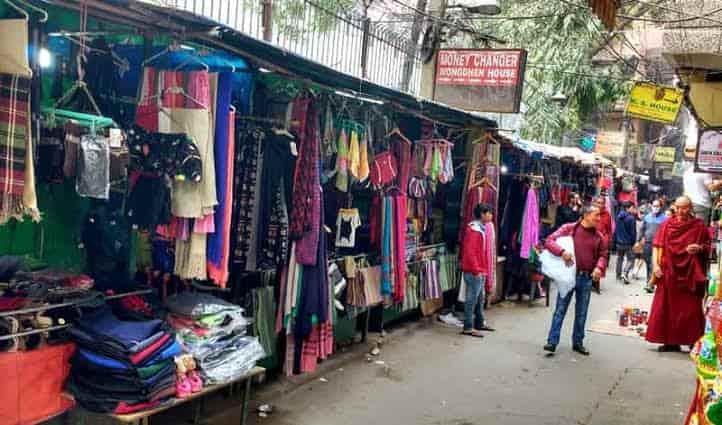
Tibetan Refugee Market Dwarka Delhi has become South West Delhi’s answer to winter shopping, a seasonal market that sets up in Sector 10 each year specifically to sell warm clothing, shawls, and woollens at fixed, genuinely reasonable prices. Unlike the sprawling, decades-old Tibetan settlement at Majnu Ka Tila in North Delhi, this Dwarka market operates on a distinctly different model — it’s not a permanent community but a recurring seasonal stall setup, well established enough that the Tibetan Parliament-in-Exile has sent representatives to visit it, and popular enough locally that residents plan their winter wardrobe shopping around its arrival each year.
For anyone in South West Delhi looking to stock up on quality woollens without the usual haggling exhaustion, here’s what you need to know about where this market sets up and how to reach it.
Tibetan Refugee Market Dwarka Delhi: Overview
| Detail | Information |
| Location | Sector 10, Dwarka, South West Delhi |
| PIN Code | 110075 |
| Market type | Seasonal winter market, fixed pricing |
| Typical season | Roughly mid-November to mid-February |
| Known for | Shawls, woollens, winter accessories, high quality-to-price value |
| Nearby locality reference | Amberhai, near District Court Complex Dwarka |
| Nearest metro | Dwarka Sector 10, Blue Line |
A Recurring Seasonal Market Built Around Winter Shopping
The Tibetan Refugee Market in Dwarka Sector 10 operates on a recurring seasonal cycle rather than as a year-round fixture, typically appearing in the neighbourhood from around mid-November through mid-February, timed precisely to cover Delhi’s coldest months. This model distinguishes it clearly from Delhi’s other, more permanent Tibetan markets, like the well-established community at Majnu Ka Tila in North Delhi or the Tibetan handicraft market near the ISBT Shahdara Link Flyover on Ring Road — both of which operate year-round rather than on a seasonal basis.
What draws consistent praise from local shoppers is the market’s fixed-price model. Unlike many of Delhi’s bazaars where haggling is essentially mandatory, vendors here typically set consistent prices, which many visitors describe as reflecting genuinely good value for the quality on offer. Reviewers consistently rate the market highly — around 4.2 stars based on hundreds of reviews — for its combination of solid winter wear quality and straightforward, low-hassle shopping experience.
The market’s significance extends beyond simple retail too. In January 2025, parliamentarians from the Tibetan Parliament-in-Exile, Tenpa Yarphel and Sonam Norbu Ratsa, conducted an official inspection visit to the Dwarka Tibetan market as part of a broader initiative to periodically check in with Tibetan diaspora communities across India — a reminder that these seasonal markets, however small, represent genuine livelihoods for Tibetan traders operating within India’s refugee community.
Getting to Tibetan Refugee Market
Dwarka’s extensive metro coverage, among the densest of any single sub-city in Delhi, makes reaching Sector 10 for this seasonal market genuinely straightforward.
By Metro
- Dwarka Sector 10 metro station on the Blue Line serves the area directly, sitting close to where the market sets up seasonally, near the District Court Complex Dwarka and Amberhai locality.
- The Blue Line runs through Dwarka’s numbered sectors, connecting onward toward Dwarka Sector 21’s major interchange hub, linking to the Airport Express Line and Magenta Line for those approaching from elsewhere.
- Neighbouring Dwarka Sector 9 and Sector 11 metro stations offer alternative boarding options depending on which block or direction you’re coming from.
By Road
- Dwarka’s planned, wide-road layout makes the sub-city considerably easier to navigate by private vehicle or cab than Delhi’s older, denser markets.
- Sector 10 sits within Dwarka’s broader internal road network, connected to the sub-city’s main arteries linking toward Palam, Dabri, and onward to central Delhi.
By Auto and Bus
- Autos and e-rickshaws operate readily throughout Dwarka’s sectors, making the final stretch from the metro station to the market’s exact seasonal location straightforward.
- Given the market’s temporary nature, checking current-year signage or local listings for the exact setup location within Sector 10 is worthwhile, since seasonal stalls can shift slightly year to year.
Distance From Tibetan Refugee Market to Key Points
| From Tibetan Refugee Market | Approximate Distance | Typical Travel Time |
| Dwarka Sector 10 Metro Station | A short distance | 5–10 minutes on foot |
| District Court Complex Dwarka | Nearby | 5–10 minutes by auto |
| Dwarka Sector 21 (major interchange) | A few sectors away | 15–20 minutes by road |
| Indira Gandhi International Airport | A short distance | 15–25 minutes by road |
Neighbourhoods and Landmarks Around the Market
Dwarka’s sector-based layout puts several notable locations within easy reach of where the seasonal Tibetan market sets up in Sector 10.
- Amberhai — the immediate locality reference for the market’s Sector 10 location.
- District Court Complex, Dwarka — a significant nearby civic landmark, useful for navigation.
- Dwarka Sector 9 and Sector 11 — neighbouring sectors with their own metro stations, offering alternative access points.
- Dwarka Sector 21 — the sub-city’s major transit interchange, connecting toward the airport and central Delhi.
- Other Dwarka clothing retailers — the broader Amberhai area is genuinely dense with clothing stores, with dozens located within just a kilometre of the seasonal market.
Shopping Tips for the Tibetan Refugee Market
A seasonal, fixed-price market calls for slightly different planning than Delhi’s year-round bazaars.
- Check current-year dates before planning your visit, since the market operates seasonally, typically from around mid-November to mid-February, and doesn’t run outside this window.
- Take advantage of the fixed pricing model, since it generally spares you the extended negotiation typical of most Delhi markets while still offering genuinely good value.
- Visit specifically for winter essentials — shawls, woollens, and cold-weather accessories are the market’s core strength.
- Confirm the exact setup location within Sector 10 for the current season, since small seasonal markets can shift their precise spot from year to year.
- Combine your visit with other clothing shopping in the broader Amberhai area, given the density of additional stores nearby.
Frequently Asked Questions
Q1. Is the Tibetan Refugee Market in Dwarka open year-round?
No, it operates as a seasonal winter market, typically running from around mid-November through mid-February, so it’s worth checking current dates before planning a visit outside that window.
Q2. Which metro station should I use to reach the market?
Dwarka Sector 10 metro station on the Blue Line serves the area directly, with Sector 9 and Sector 11 stations offering nearby alternatives depending on your direction of approach.
Q3. How does pricing work at this market compared to other Delhi bazaars?
The market generally follows a fixed-price model rather than the extensive haggling typical of most Delhi markets, with reviewers consistently praising the value for money on winter wear like shawls and woollens.
Q4. Is this the same as the Tibetan market at Majnu Ka Tila?
No, they’re entirely separate — Majnu Ka Tila is a permanent, decades-old Tibetan refugee settlement in North Delhi, while the Dwarka market is a smaller, seasonal winter-only setup in South West Delhi’s Sector 10.